


NHS England is aiming for service-wide productivity increases and is increasingly turning to technology to help achieve those aims. Their recent drive for nationwide EPR (Electronic Patient Record systems) has been particularly notable, with 93% of providers using them as of June 2025.
This recent focus on digital transformation has been an eye-opener for many trusts and healthcare facilities across England, including at RNOH, the Royal National Orthopaedic Hospital.
The Problem
When RNOH approached Panacea, they had a traditional, multi-tiered network that had grown organically over time. Every addition had added layers of complexity, eventually making it difficult to manage and troubleshoot issues.
The network itself was quite rigid, relying on manually configured physical ports. This created issues when staff unplugged devices and plugged them back into another port that was configured differently.
The incumbent network also suffered some tricky Wi-Fi issues: portable devices sticking to wireless access points (APs) instead of roaming, AP frequencies contending with each other, and emergency communication badges struggling to maintain voice-grade connection – all leading to perceived coverage “blackspots”.
Plus, the hospital had to manage an ever-growing list of diverse wired and wireless devices – everything from Dräger MDI patient monitors all the way down to networked label printers.
Yet still, the stakes were rising. The sharpest case for an upgrade was the NHS’s nationwide EPR (Electronic Patient Record) rollout. Wayne Buttigieg, RNOH’s Head of ICT Operations, stated:
“The EPR project [was a particular trigger.] We needed to do it because we knew we’d be installing so many more network devices.”
Wayne Buttigieg, Head of ICT Operations, RNOH
All in all, the network was being asked to do more than it was ever designed for, so the RNOH engaged Panacea Networking to rebuild a future-ready network.
The Solution
Automated ports
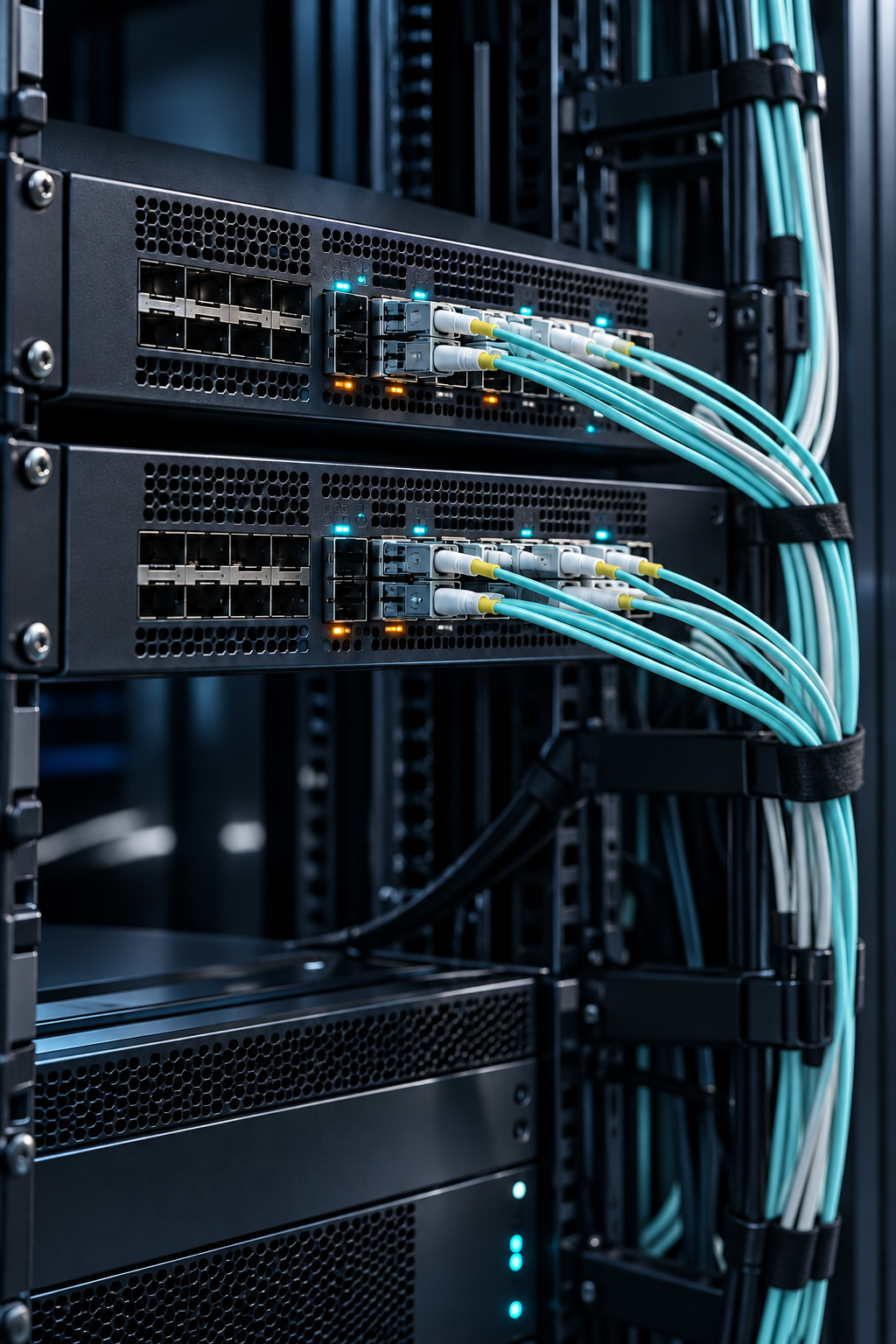
The network’s rigidity – and its resulting growing pains – were overcome by automated port provisioning through Extreme Fabric Connect.
Rather than inflexibly tying a network socket to a given device or purpose, network policy now follows device identity. Therefore, a laptop, a label printer, or a patient monitor could sequentially be plugged into a single Ethernet port, and the network would automatically provision the appropriate permissions and security each time.
This is ideal for a hospital whose IT estate is always growing, as ports don’t need to be manually configured each time there’s a change.
Wi-Fi designed for roaming
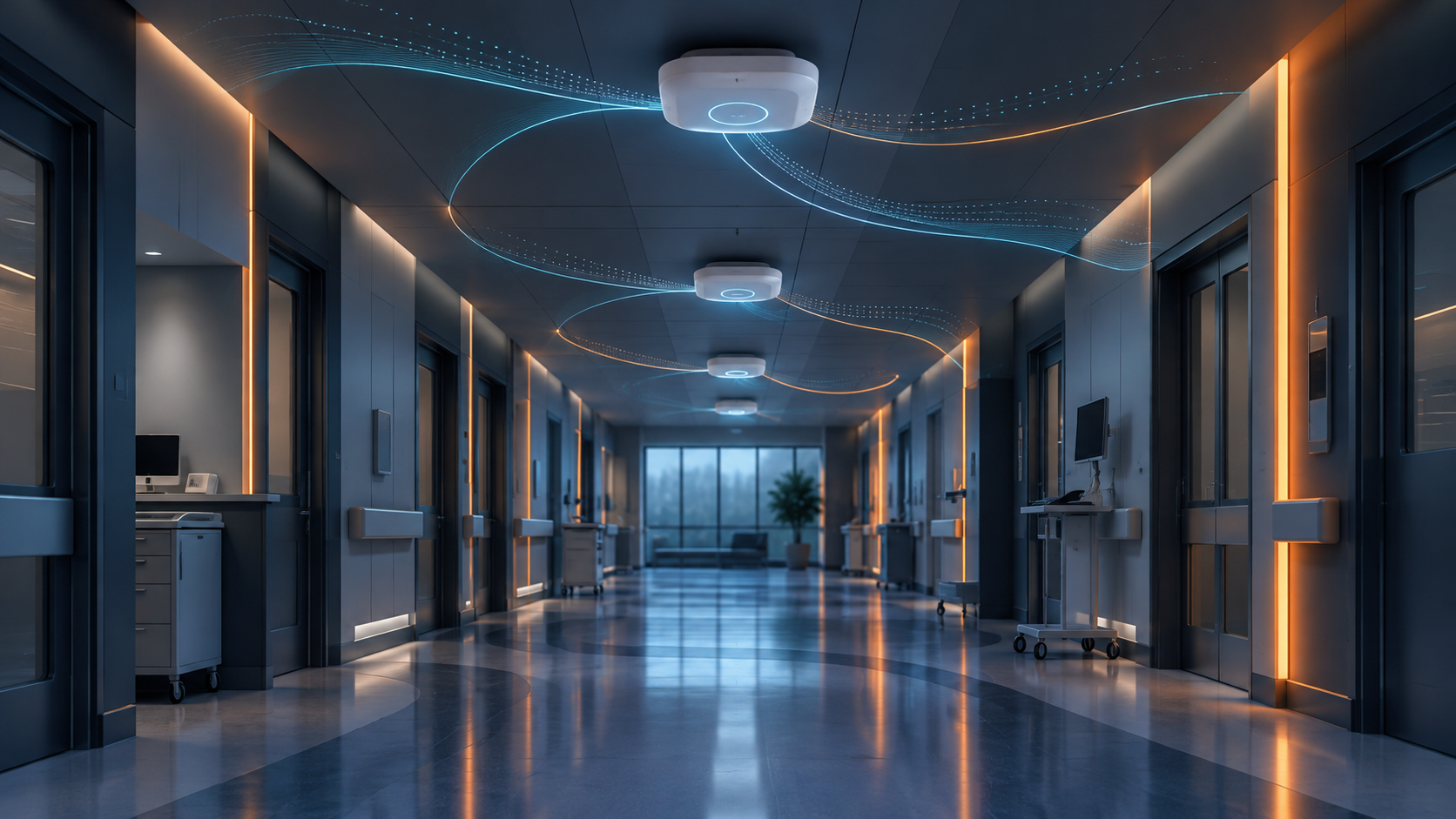
Next, the Wi-Fi issues. The existing wireless network provided serviceable connections to standard IT devices across campus, but it wasn’t reliably providing voice-grade connection to smaller, clinically significant devices like communication badges. Smaller devices like these often struggled when roaming, draining battery power more quickly than expected.
Our investigations found the root cause: a Wi-Fi setup that the hospital’s IT estate was outgrowing – fast. We redesigned the whole radio-frequency environment from the ground up, eliminating channel clashes, enabling more expected roaming behaviour, and improving Wi-Fi connectivity campus-wide.
To accommodate the high-dependency nature of RNOH’s network, Panacea carefully planned and orchestrated a phased roll-out for minimal disruption. We deployed carefully selected parts of the network piecemeal, ensuring that each phase was contained and reversible.
The Result
Go-live day felt less like a pivotal moment and was noted more through the absence of technical issues. The prior network’s rigidity and dependence on manual configuration have been largely eradicated by Fabric’s automated port provisioning.
RNOH’s Head of ICT Operations, Wayne Buttigieg shares an example of ERP-critical hardware. Before, IT would need to provision specific port numbers for new devices and hunt down those specific physical ports. Now, first line teams can just plug them in where they need to be.
“If we wanted to move things, or the end user team wanted to install something new, they would always have to involve [the IT infrastructure team]. Now they don’t. […] The worst issue you might get is that an area has run out of ports and we need another switch. [Things like that] just make life so much easier.”
Wayne Buttigieg, RNOH’s Head of ICT Operations
Faster device changes
Port automation has also minimised IT support calls. Previously, port mismatches needed escalating to network engineers – but now first-line staff are free to move devices to match clinical need, without involving other technical teams or impacting security. Fabric port automation has made it far simpler for the hospital to roll out and support hardware – including devices critical to the EPR project.
“It means the [first line team] can just sort stuff out themselves. ‘This port’s down. I’ll just plug it into the one next to it’ – and it’ll just work. Whereas before, they’d have had to go to a [second line] engineer. […] They can fix stuff quicker [and] it’s less burden on the infrastructure team. So that’s been brilliant.”
But going deeper than mere IT support and network management, rebuilding the network with Extreme Fabric Connect automation has fundamentally increased the speed at which RNOH can deploy new networked hardware. Devices and clinical systems can be moved or newly deployed at speed and scale in line with medical need, rather than being tethered to specific ports.
In turn, this provides RNOH with a level of flexibility that they were unable to achieve before. New clinical devices, and therefore potentially new patient services, can be introduced more quickly and flexibly because changes don’t have to wait for manual network configuration.
More reliable Wi-Fi
There was also a marked improvement in the hospital-wide Wi-Fi experience. Thanks to the RF redesign, wireless connectivity issues are now a rarity.
“Having a more intelligent look at things definitely made a difference. […] There [were a number of] Wi-Fi blackspots, and obviously they’ve gone away.”
And speaking more generally about the network as a whole:
“We feel a lot more confident that the network is reliable. You know, [reliability is] not something we worry about [anymore].”
Wayne Buttigieg, Head of ICT Operations, RNOH
A quiet go-live
Thanks to our meticulously planned go-live, there were no nail-biting “all or nothing” switchover moments as the new network came online – it was reassuringly anticlimactic. And also thanks to Extreme’s automated Zero Touch provisioning, the installation of core network hardware could be entrusted to non-technical personnel.
“I remember the first days – we were barely getting any calls. But that’s because we’d got everything set up.”
As Panacea Networks continue to support the network, Wayne agrees that Panacea has been a “safe pair of hands” and a reliable alternative to larger networking providers:
“You designed it, but you’re still [here] now. It means if we need to change something or we have an issue, [Panacea’s team have] enough site knowledge to know where to look. And I don’t think you get that with the bigger guys.”
Wayne also praised Extreme Networks as a vendor, adding that they have “moved from being [just another] alternative to being a serious contender.”
Now, months on from go-live, the team’s confidence in the network has remained. When talking about the project’s successes, Wayne adds:
“[You can measure the project’s success] by the fact that [we’re] not getting complaints. […] End users don’t talk about a reliable network. The same way you don’t talk about the fact your road hasn’t got potholes in it.”
Wayne Buttigieg, Head of ICT Operations, RNOH
The result has been a network that just works – for clinicians, for patients, and for whatever RNOH plans to do next.
This is the standard that every organisation with a high dependency network should expect from their IT infrastructure. If your organisation is facing similar pressures with legacy networks, reach out for a no-obligation chat with our engineer-led team.